Home savings plan platform
Backend for a home savings plan: onboarding, contracts, indexed monthly installments, QR payments and reconciliation, delinquency and home allocation.
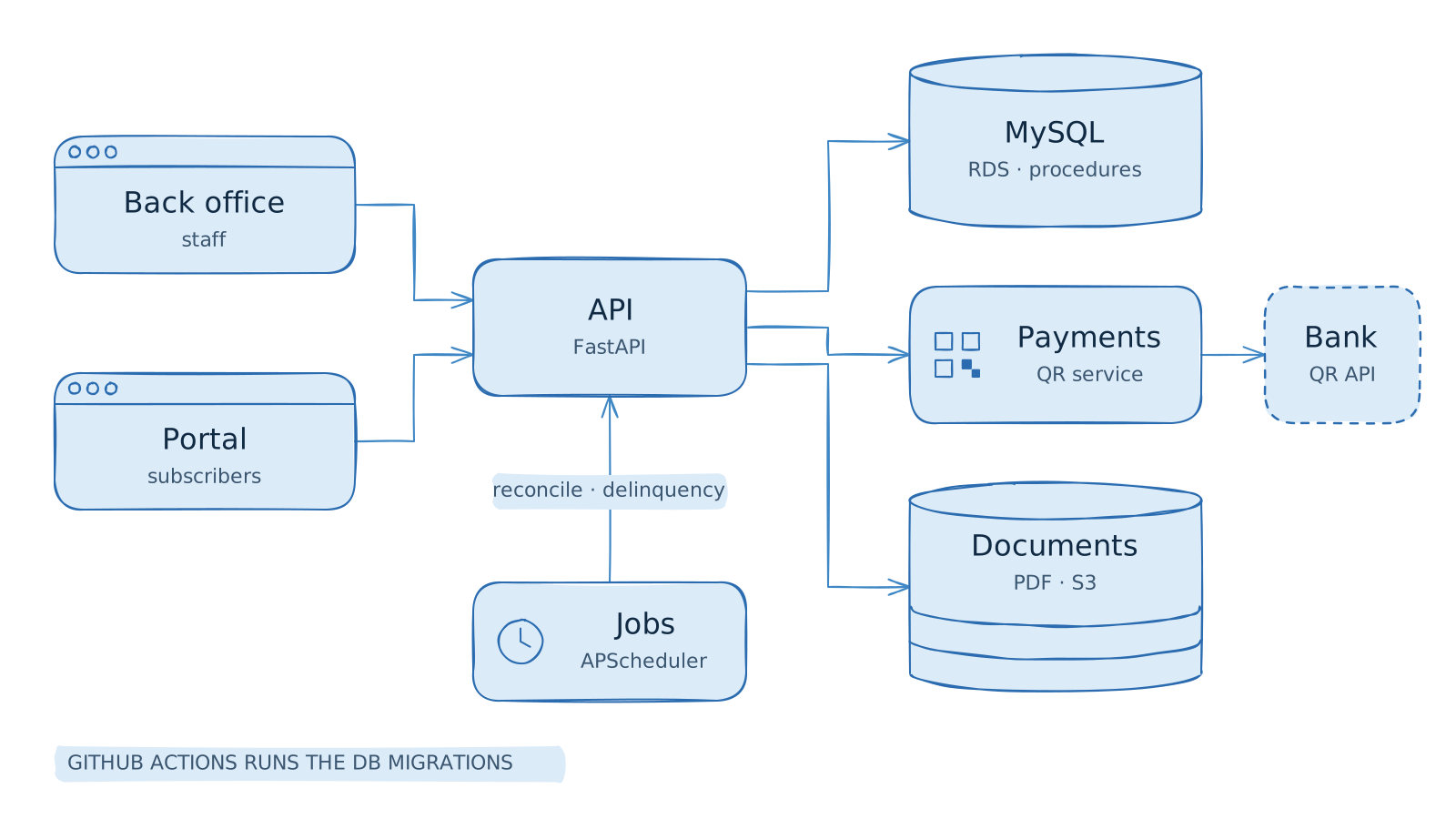
The product
A savings plan lets subscribers pay monthly installments, indexed to a unit of value, until they are allocated a home by raffle or bid. The system runs that whole lifecycle for a back office and a subscriber portal.
What I did
I worked on the backend for a year, owning features end to end, and on the MySQL schema and its stored procedures.
- Payment reconciliation for QR payments through a bank’s API, with error handling and expiry of unpaid debts.
- Advance payments: manual, cancelled, regenerated and settled.
- The subscriber portal: dashboard, current account, receipts, documents and notifications.
- Notifications for raffles and group events, with PDF attachments.
- PDF receipts and contracts generated from templates.
- Delinquency reports and audits of every sensitive procedure.
- Roles and permissions, password recovery, and home allocation through delivery.
How it runs
FastAPI on Python, MySQL on RDS with migrations run from GitHub Actions, PDFs with WeasyPrint, scheduled jobs with APScheduler, and logs in S3.
How I’d harden the payments
Payments are where a mistake costs real money, so this is where I would invest next:
- Receive the bank’s payment notifications into a queue and apply them with idempotent workers keyed by the bank’s payment ID, so a notification delivered twice is applied once.
- Write each payment and its follow-ups (receipt, notification) in one transaction with an outbox table and publish from there, so a crash between steps cannot leave a payment without its receipt.
- Keep the scheduled reconciliation as a safety net that compares the bank’s records with ours and flags differences instead of fixing them silently.
- Retry calls to the bank with backoff behind a circuit breaker, and send what still fails to a dead-letter queue with an alert.
- Cache read-heavy values such as the current unit of value, and move reports to a read replica.
Confidential client work: no screenshots, names or figures that identify the client.